
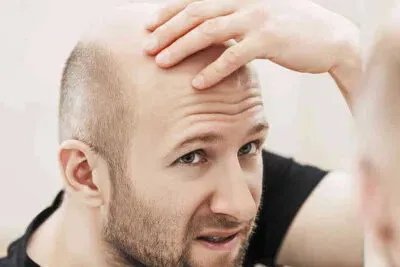
The 12 types of alopecia (and their characteristics)
The 12 types of alopecia (and their characteristics
Hair is a biomaterial that develops on the skin of most mammals and, as it is a fine, plastic, and elastic filament composed mainly of keratin fibers, it fulfills a fundamental function at a biological level: protection. But of course, humans, outside of this evolutionary importance, have given it a very important aesthetic meaning .
Thus, everything related to abnormal hair loss can be a cause for concern for many people, who see baldness as one of the greatest aesthetic threats. And if we take into account that almost 50% of the population suffers from more or less severe alopecia problems, it is necessary to talk about it and its nature.
Alopecia, considered synonymous with baldness, refers to the absence or abnormal loss of hair, which affects only the scalp or the entire body and occurs temporarily or permanently. Similarly, this abnormal hair loss can be triggered by many different causes and also expressed differently.
Therefore, in today’s article and by the hand of the most prestigious scientific publications, as well as the establishment of the clinical basis of alopecia in terms of causes, symptoms, and treatment, We are going to explore the particularities of the different types of alopecia . Let us begin.
What types of baldness are there?
Alopecia is a clinical term that refers to the absence or abnormal loss of hair . It is a concept that is considered synonymous with baldness and, in a country like Spain, the second with the highest incidence, behind the Czech Republic, occurring in 42% of men. Therefore, the scarcity of hair with a high prevalence is a “problem”, since it is more common in men than in women, although they, despite the myths that exist, can also present it.
In general, we speak of alopecia when there is significant hair loss or when hair loss exceeds 100 per day, since a loss of between 50 and 90 is normal. But apart from these oversimplified definitions, what is really important is to identify the exact type of alopecia.
In this sense, the various forms of expression of baldness are classified, grouped into two large groups: non-scarring and scarring, each with subtypes within it. And without further ado, let’s talk about them.
1. Alopecia areata without scarring
Non-scarring alopecias are a group of benign forms distinguished by the fact that they do not involve the destruction of the hair follicle, also known as the hair root.This hair follicle, located under the skin, in the dermis, is where the metabolic and mitotic activity are located through which continued hair growth can occur. When there is no destruction of this hair root but there are functional changes, we will address one of the following types of hair follicles:
Male androgenetic alopecia 1.1
Androgenetic or androgenic alopecia is the most common form of baldness. For men, one affects 75% of men They typically begin to show clear symptoms between the ages of 30 and 40, though the first symptoms frequently appear during adolescence.
The main causes are the polygenetic inheritance of certain genes together with hormonal factors, specifically the action of male hormones on the hair follicles, which causes their atrophy until noticeable hair loss.
Female androgenetic alopecia (1.2)
Female androgenetic alopecia occurs in approximately 10% of women and its causes, like the male, respond to both genetic (increased predisposition to genetic inheritance) and hormonal factors, which explains why the appearance of androgenetic alopecia usually appears. menopause and the consequent decline in female sex hormones. In this case, the hair loss is more diffuse (it does not usually disappear completely as in men) and the typical “caries” typical of male alopecia are not noticeable.
Alopecia areata (1.3)
Alopecia areata is a type of baldness, which is the second most common form, expressed by the appearance of hairless rounded patches in certain areas of the scalp and other parts of the body due to autoimmune disorders. It is a relatively unpredictable form of alopecia, because while there are times when hair grows back in that area, there are other times when it doesn’t. But in 8 out of 10 cases, after about a year, the hair grows back.
1.4. alopecia universalis
Diffuse alopecia is a type of baldness, and although there is generalized and progressive hair loss, this loss is not complete. That is to say, it is not total baldness but a lack of hair that, although it is obvious, can be more or less intense. It is a type of hair loss that is generally reversible since diet and lifestyle play a very important role, as well as the taking or not of certain medications.
1.5. alopecia traumatica
By traumatic alopecia, we understand that type of baldness that responds totally and exclusively to controllable causes. And it is caused by bad hairstyle habits or general hair care, nervous tics that pull our hair (which must be eliminated with the help of a psychologist), or stress.Therefore, it is a type of baldness that is not only reversible but also preventable.
Alopecia universalis
Universal alopecia is the most prominent type of baldness since it is based on total hair loss from the entire body , which affects not only the scalp, but also the rest of the body’s hair, eyelashes, eyebrows, etc. It is of autoimmune origin (like areata), that is, hair loss that occurs as a result of the attack of immune cells on our body of hair follicles. But while this attack is aggressive, remember that the hair root is not destroyed like in non-scarring alopecia, so it is a reversible condition.
Telogen effluvium (1.7)
By telogen effluvium, we understand abundant hair loss that, although reversible, occurs in a short space of time. For various reasons (illness, stress, pregnancy, postpartum, medication side effects, nutritional deficiencies…), a group of hair follicles “skip” the hair growth phase, which is why generalized hair loss occurs before the weather. However, in most cases, the situation returns to normal in less than a year.
1.8. alopecia fibrous
Alopecia fibrosis, unlike the others, is a mild form and it occurs more frequently in women . Also known as frontal alopecia, since hair loss occurs in such a way that the hair grows more and more backwards (leaving a larger area in front), its causes are still not clear, but everything seems to know that it is associated with menopause, so it would be hormonal factors. That could be one of the deciding factors.
1.9. Alopecia localis
Localized alopecia refers to that form of attenuation in which hair loss is concentrated in specific areas of the scalp. It is not total baldness, but there are the “famous bald spots, especially the
2. Alopecia scarring
The healing of alopecia is a set of forceful forms that have the peculiarity of intervening in the destruction of the aforementioned hair follicle . Due to injury, the root of the hair is destroyed, so the hair in the area where a scar has developed will not be able to grow back. Depending on the origin of the wound that caused this irreversible damage to the follicle, we find the types of alopecia.
2.1. alopecia areata
By primary alopecia, we all understand baldness that occurs when the hair follicle is destroyed, leading to the dermatological disease of the hair itself, with physiological and/or morphological changes in the hair follicle that cause enough damage without allowing hair growth.
2.2. alopecia acquired
Acquired alopecia: we all understand that baldness occurs when the hair follicle is destroyed as a result of an autoimmune disorder (or for some unknown reason) in which the immune cells, due to a genetic error, so aggressively attack the root of the hair as the responsible cells for hair growth are destroyed.
Alopecia secondary
By secondary alopecia, we all understand the dullness that occurs when the hair follicle is destroyed as a result of dermatological infections or physical-chemical damage . Thus, those alopecias that have their origin in bacterial infections (such as leprosy), viral infections (such as herpes), fungal infections (caused by fungi, such as ringworm), or protozoan infections (such as leishmaniasis), such as those due to revelation, radiation, or burns,
Read Also :