
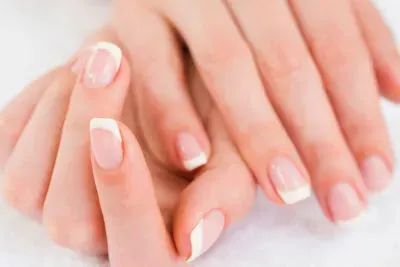
The 12 types of nails (and their characteristics)
The 12 types of nails (and their characteristics)
They are convex structures that are part of the epithelial system and are located in the distal areas of the fingers and toes. Composed of epithelial cells, they have a high content of keratin, a fibrous protein that acts as a matrix that contains these cell units.
Thus, the nails are epithelial structures composed of dead cells that present a high degree of keratinization, which explains their hardness. The hardness is important to preserve the skin under them, facilitate the capture of tactile stimuli, favor the permeability of the skin and grab, scrape and even attack.
Anyway, we all know that nails are a very important aesthetic component. And in this sense, although it may seem that all nails are the same, there are different varieties depending on the shape they take when cut and when they are allowed to grow . Let’s see, then, what the main types of nails are.
What exactly are nails?
The nails are convex structures located on the dorsal aspect of the distal regions of the fingers. of the upper and lower extremities and composed of epithelial tissue “organs” composed of dead skin cells with a high degree of keratinization. Keratin gives the nail matrix, a fibrous protein, its characteristic hardness for these structures.
Keratinization means that although the cells are the same as the rest of the skin, they look like different structures. structures that are alive and growing at a rate of about 0.1 millimeters per day, and a growth rate of about four times higher in the structures of the hands than in the feet.
Nails perform important physiological functions . Firstly, they preserve the lower skin, developing mechanical protection and favoring the permeability of the skin of the phalanx, which regulates the flow of substances (mainly water) between the external and internal environment of the body.
Second, they act as a “grasping organ” as they help increase our tactile sensitivity. When we touch something with our fingertips, the inner surface of the nail puts pressure on the nerve endings, which increases the amount of information that the sense of touch can detect.
And thirdly, and at an evolutionary level, nails are “weapons” that we can use to capture, scratch, and even attack other animals. And animal evolution means that these nails (and their variations in other species) have a clear purpose of both defense and attack. Fortunately, we no longer use our nails (normally, but here it is better not to enter) as a weapon.
We use nails as an aesthetic component, as an important factor in beauty. And proof of this is the 14,000 million economic benefits that the global manicure industry will achieve if the trend continues to rise as it has until now, by the year 2024. Nails are a multi-billion dollar business because, with the advent of various manicure styles, people are looking to invest in their care.
What nail shapes can I have?
Nails can say a lot about our personality and the importance we give to our physical appearance. And as long as you don’t have a problem with oncophagia (biting your nails), you can bet on one of the following designs. We will see, therefore, what forms the nails can take and how they can be cut and allowed to grow to fit.
Natural nails
These are natural nails, as the name suggests, that do not require special care or cuts. It is the shape that nails take as they naturally grow. Simply cut them according to their natural profile. To be considered as such, they must be kept short so that the free edge of the nail (the dripping part) does not extend too far beyond the distal part.
Rounded nails
The ones that are removed are rounded nails. File the free angles of the edge of the nail to give them a round shape . So we just change the ends on each side of the nail, but the rest stays in its natural shape. They have a clean, natural, and simple look but allow you to elongate their appearance, so they are perfect for people with short fingers who want to continue using their hands normally.
3. Nails made of almonds
Almond-shaped nails are those that file the nails so that they take an almond shape . They can only be done when the nail is long, because it is necessary to give the free edge enough of a pointed shape. This is why they are more common with acrylic manicures.
4. square nails
Square nails are those that are cut and filed in such a way that the free edge of the nail is flat on top . The width is the same throughout the nail, and the sides form a ninety-degree angle, so the nail looks like a square. If they are worn short, they are very comfortable and perfect for people with thin hands.
5. Round nails
Oval nails are the ones that are removed by filing the edges of the nail until they have a rounded shape but have a skew to the sides. In this way, they get narrower as we get closer to the top of the free edge. They are more pointed than the exact ones. but less than almonds. They are a very good choice if you want to wear long nails but without fresh designs.
6. Maintain your nails
Fan nails are those that are filed and loaded so that they take on a flared shape , the end of the free edge being wider than the part in contact with the skin. That is, the natural way of nail growth is reversed, with tips wider than the base. It is, however, a very striking design.
7. Lipstick Nails
Lipstick nails are those that start from a rounded nail model, which cut the upper part of the free edge of the nail, giving a bias. It has a slanted cut similar to the beveled cut of lipstick. They have an asymmetrical angle, so they are a strange style that is not, however, very comfortable.
8. Ballerina toes
Ballerina nails are those that are cut and filed to mimic the shape of classic tapered ballerina shoes. We start with a square-style nail that we make narrower at the top than at the bottom. It requires long nails, but they give them a very interesting style.
Mountain tacks
Mountain peak nails are a development of almond nails, but there is a significant contrast between the width of the base and the width of the tip. The free edge of the nail is filed in a triangular style that is like a mountain with its distinctive peak. It is a form that is fashionable right now.
Nails with arrowheads
Arrowhead nails are those, similar to those of a mountain peak, whose triangular style begins not at the base of the nail, but after the area of contact with the skin. They start from a square shape that assumes, near the tip, the triangular style. They look like an arrowhead (hence the name) and though they have since then, they don’t feel very comfortable manipulating objects with their hands. should be long They are very eye-catching.
11. Stiletto Nails
The stiletto ones The long version of the nails is a mountain peak. The triangular shape starts from the base of the very free edge of the nail (unlike arrowhead nails) but rather the height of the “mountain” and, therefore, the slope. They are a trend since they allow manicures for long nails with fresh designs.
12. Squoval Nails
We end our trip with our nails. The squoval style was born from the combination of oval and square shapes . They are allowed to grow similarly to squares, but instead of allowing the top to be flat, the edges are filed down to be slightly precise. The style is recommended for people who want to have square but not long nails, as the pure square style, on medium and short nails, can sink the edges into the flesh. With this square style, we avoid this exciting event.
Read Also :
The 5 types of folliculitis (causes and treatments)
10 effective remedies for blisters (prevention, care, and treatment)
Causes, symptoms, and treatment of pressure ulcers