
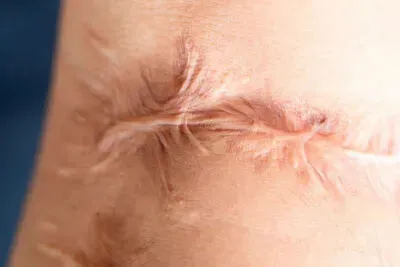
The 5 types of scars (and their characteristics)
The 5 types of scars (and their characteristics)
Our bodies have the ability to recover after damage. Accidents and injuries happen frequently, and sometimes we have suffered a few. At this time, our body tries to respond to the reconstruction or stay in the best conditions despite the damage suffered. An example of this is scars.
A scar can appear for a variety of reasons, such as surgery, injury, or infection. They can also do it anywhere on our body and take on a changing appearance, as some flatten, some rise, some itch, and some can be painful.
What are scars?
Skin scars are a skin repair mechanism that begins in the face of scratches and wounds to produce collagen fibers that allow the wounds to close and return, as far as possible, to a normal state in the dermis. After the injury, there will always be a scar, which will usually appear pink or reddish compared to the rest of the skin. However, some are more visible than others, depending on a variety of factors. Among them, the following stand out:
Location of the lesion : when the wound occurs in areas of less skin tension, the healing process is easier. The scheme known as Langer lines is usually guided by health professionals when making surgical incisions, since this facilitates the recovery process of the dermis.
Dealing with the Wound: One of the key elements to achieving good healing is to heal the wound from the moment it occurs. It is vital that the health professional performs this procedure correctly and ensures that possible infections are prevented.
Patient’s age : older people show difficulties in healing processes as they have fewer collagen fibers compared to younger people.
Those with a depressed immune system (for example, due to illness) will be more likely to develop infections and have a slower healing process, as they have a reduced inflammatory response and less cell proliferation.
Nutritional deficiencies : People who show deficiencies in some nutrients such as iron, protein, or magnesium find that their body’s functions, including their ability to heal, are affected.
Medications : Some medications can interfere with the healing process. An example of this is corticosteroids, which exert this effect because they reduce vascularization and inhibit protein synthesis.
Tobacco and alcohol: Both medications have been shown to slow down the healing process.
Ultraviolet rays : This type of radiation, which is emitted by the sun and other artificial sources, can be detrimental to the healing of lesions since it contributes to hyperpigmentation of the skin.
In addition to everything we have discussed, it should be noted that the healing process consists of three steps. The first is an inflammatory phase, in which vascular enlargement and our inflammatory cells and platelets travel to the damaged area to create a scab that prevents bleeding.
This is followed by a proliferation phase, in which the injured tissue begins to regenerate thanks to collagen. Finally, a few weeks after the injury, the collagen is reabsorbed and the area is remodeled, giving the rest of the skin a smoother appearance.
What kinds of scars are there?
Contrary to popular belief, not all scars are created equal. In this article, we are going to review the different existing types and the characteristics of each one.
1. Physical scarring
These types of scars are discreet in the form of fine lines , without relief and without negative change over time. Physiological segments are the ideal type of brand that is considered to be achieved in the best of cases.
While they may not be noticeable outwardly, that doesn’t mean they don’t need attention. It is recommended to moisturize them frequently with a common cream or lotion, as this helps them to remain invisible and blend with the rest of the skin.
It has some natural properties such as aloe vera or emu oil, which have regenerating and soothing properties and are very interesting when it comes to treating scars. However, always remember to consult your doctor about the best alternatives since each scar is unique, as we have seen. They all have different medical rates .
2. Hypertrophic scars
Hypertrophic scars They are characterized by their showy appearance because they are reliefs and are relatively thick compared to physiological ones. This result is due to the fact that, at the time of injury, an excessive amount of collagen is produced. However, in this type of scar, we will not see a growth that exceeds the size of the initial lesion.
As we said, the type of scar cannot be determined shortly after the injury. In some patients, healing may be slower than expected, and a visible scar may diminish significantly over months or even years.
In some cases, scars of this type can be treated medically through various treatments and interventions, in some cases by applying corticosteroids and silicone plates. However, in a large percentage of cases, it is not necessary to resort to these measures because the same passage of time allows the skin to return to its normal state .
3. Scars that have atrophied
Atrophic scars are those in which there is still little subcutaneous tissue because the patient has a lack of collagen. That is, the other case is that of hypertrophic scars. In these cases , the skin of the damaged area is thinner than the rest of the dermis. At first glance, it may seem that a wound is not yet closed when it is not.
These types of scars are especially common in people with connective tissue diseases or hypermobility problems. These types of marks are very common in people who have suffered from severe acne or smallpox, so the skin shows a rough appearance with numerous pores or pores.
To treat this type of scar, it is advisable to use creams that promote collagen production, although laser treatments can be used in the most severe cases.
4. Keloids
These types of scars are the most serious of all that we have discussed. They are similar to hypertrophic scars in terms of their morphology, but they extend well beyond them, since they are well beyond the limits of the initial injury or wound . That is, it is a scar that tends to extend into the healthy tissue that surrounds the damaged area.
In general, they tend to provide more relief than hypertrophic ones and can be more complex for humans due to their attractiveness, especially if they occur in highly visible areas of the body. In addition to the above, this type of scar is often accompanied by unpleasant sensations such as intense itching, burning sensations, or hypersensitivity to contact.
Although there are many factors that determine the ease of healing in each person, keloids usually have a certain genetic predisposition.
5. Contracts
These types of scars are those caused by burns . The natural reaction of the skin to this type of aggression is shrinkage, so the skin does not return to its normal appearance since it is deformed by this reaction. The scar usually develops after a burn and becomes more severe, making it difficult for the patient to move.
Contractures can lead to serious complications since once the tissue adopts this arrangement, it is very difficult to recover normal movement, which can prevent the person from functioning properly, even in basic tasks such as showering, dressing, or eating.
Second and third degree burns always leave a scar. This does not mean that contracts are inevitable. Therefore, certain measures can be taken to prevent this situation. For example, exercises can be done to keep the muscles in burned areas flexible. It is also crucial to wear splints and allow the person to function on their own as much as possible, as the tightness of the scar and subsequent dislocation can prevent use of the joints in the burned areas.
Conclusions.
In this article we have talked about the different types of scars that already exist. The body has a great ability to rebuild itself after damage, but sometimes some care is needed to avoid complications in the healing process. They all follow different medical rates, as this depends on factors such as the type of injury, age, diet, or health status of the individual.
A physiological scar is a common symptom after an attack on the dermis. Although sometimes the process is complicated and phenomena such as keloids or hypertrophic scars occur, which are unsightly and can cause discomfort in a person’s body image. Also, these pathological scars can be painful and can even damage healthy tissue near the injured area.
Read Also :
The 5 types of folliculitis (causes and treatments)
10 effective remedies for blisters (prevention, care, and treatment)