
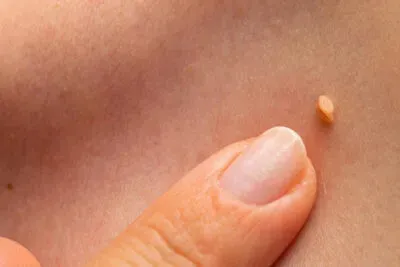
Why do warts appear on my neck ?
Why do warts appear on my neck ?
At the level of human relationships, the neck is one of the most exposed parts of our body and one of the first things we see when we are talking to another person. So anything that might interfere with aesthetics is a concern. And in this context, warts that develop on the neck are something that worries many people .
Warts are small bumps on the skin that look like lesions and can develop anywhere on the body. Although they are not dangerous to health and do not usually cause pain, they are uncomfortable, bothersome, and unsightly, depending on the consistency of the tissue and, above all, on the dermatological region in which they develop.
In this sense, warts on the neck are one of the worst. Due to their high relative incidence, the fact that they can cause secondary injuries if rubbed or caught, and, of course, their cosmetic impact, it is important to know why these bumps are seen on the skin of the neck.
For this reason, in today’s article and hand in hand with the most prestigious scientific publications, we are going to analyze the clinical basis of warts that develop specifically on the neck, looking at the main reasons behind their appearance and analyzing treatment options for them Let’s start.
What are warts?
Warts are small, granular lumps that develop on the skin anywhere on the body as a result of human papillomavirus (HPV) infection. They are injuries that, although they are not dangerous or usually cause pain, are unsightly, annoying and uncomfortable.
While such warts are rough contact lesions with a pattern of black dots (due to small blood vessels that coagulate blood), there are other lesions that can arise on the neck that are not due to a viral infection such as warts and are also soft and flesh-colored or brown, called fibroids. These are often seen in skin folds, the groin, the armpits, and, of course, the neck.
These fibroids are also called skin tags or seborrheic keratoses. In this sense, fibromas are benign tumors that result from the abnormal and accelerated growth of skin cells. but not, unlike warts like that, contagious.
Myomas in the neck are painless in the vast majority of cases, and beyond specific episodes of inflammation, they are not usually bothersome. But considering that, seen between 25 and 30 years old, they can measure between 0.5 and 1 cm and grow in size and number, the aesthetic impact can be remarkable.
Either way, the bottom line is that fibroids and warts cannot be treated with home remedies . A visit to the dermatologist is mandatory since this professional will determine one lesion or another and, depending on its characteristics, apply one treatment or another. It should be noted that interventions to remove warts and fibroids are, today, fast, safe, and effective.
Treatment options will be discussed later, but these include the use of lasers, cryotherapy, electrosurgery, the use of salicylic acid, and, in some cases, surgery. Most importantly, warts, which often go away on their own after a few weeks or months without intervention, can be easily removed.
Myomas and warts on the neck: why are they visible?
As we have seen, fibroids and warts are not the same, although we often confuse them. Warts are contagious; fibromas are not. So, we need to distinguish between the two if we are going to talk about the reasons behind the ugly growth on the neck.
Let’s start with warts. Warts are so common because we are dealing with an infectious dermatological disease that can be transmitted between humans through infection by the human papillomavirus (HPV), which has more than 150 subtypes, some of which directly or indirectly cause the development of warts. The warts contact objects touched by a person with warts.
Depending on the area where the virus has been exposed, the wart will grow on one or another part of the body. Keep in mind, however, that usually there must be a wound that allows the pathogen to enter, but often the human immune system fights the infection before the wart becomes infected .
That is why, although they can appear at any time in life, warts are seen more frequently in people with less mature immune systems (the child population) or in people with weak immune systems. In this sense, although exposure and infection to the Human Papillomavirus (HPV) is the trigger, there are important factors that come into play: immune status, genetic predisposition, hormonal changes, neck skin injuries, etc.
After looking at warts, let’s talk about fibroids. The key is that they are not contagious because they do not appear to be due to infection with the Human Papilloma Virus (HPV). Therefore, they develop solely through genetic triggers and hormonal risk factors (they are associated with poorly controlled diabetes) and being overweight.
Myomas can be confused with warts, but unlike warts, they are soft (warts are rough) and appear in the folds of the neck, usually in groups and appearing between 25 and 30 years of age. As we have said, fibromas or skin tags are benign tumors that, although they are not dangerous, are ugly like fibromas.
The visual expression of human papillomavirus (HPV)
How are warts and fibroids on the neck treated?
For the treatment of both warts and fibroids, it is best to put yourself in the hands of a dermatologist. Not only treating these lesions themselves, but distinguishing whether we are dealing with a case of a wart or a fibroma, since the choice of treatment will be different in each case. So we have to again distinguish between the two bumps.
Let’s start with warts. As a general rule, warts on the neck go away on their own. There is no need for treatment because the human papilloma virus is fighting the viral infection in the body. Thirty percent of warts disappear within six months (some subside for weeks), and another forty percent disappear within two years.However, it is true that a significant percentage (30%) do not. In this case, especially if they grow or cause discomfort, it is important to mediate the problem.
Of course, home remedies to remove warts should not be applied under any circumstances. We’re not even going to mention them. Not only because they can leave lifelong scars (even more unsightly than the whistle itself), but also because there is a risk of infection that can be complicated in some cases.
We always have to go to a dermatologist. Treatments to remove warts are quick (everything is ready in about 15 minutes), painless, effective, and safe , because there is practically no risk of scarring or infection. Depending on the nature of the wart and the exact location, one treatment or another will be selected.
Other options include: CO2 laser (virtual laser evaporation of the wart without leaving marks; therefore the most effective method); salicylic acid (wart applied topically and then filed away to remove dead skin); cryotherapy (liquid nitrogen is applied to the wart, but on the neck there is a risk of scarring and it is painful); electrosurgery (the wart burns without leaving a scar); and, if none of them is viable, surgery can be chosen since it is evident that a small scar remains in the area.
After any of these interventions, it is important to hydrate the skin (after leaving the consultation, apply moisturizing creams to the skin and drink plenty of water), follow the dermatologist to assess how the skin is changing and avoid sun exposure for so long. and if this is not possible, apply sunscreen in both winter and summer.
Finally, let’s talk about fibroids. As we have said, unlike feces, they are not contagious and cannot be spread by contact. They are benign tumors that are not caused by a viral infection . The dermatologist’s approach will be different, but the treatment options are very similar: laser therapy, cryotherapy, electrocoagulation (using electrical current to coagulate the tissues we’re about to remove), and, if none is feasible, surgery.
In the case of fibroids, treatment is even more important. Not because they are dangerous or painful, but because, unlike warts, being benign tumors, they do not disappear on their own. Furthermore, without intervention, they grow in size and number. So, if they bother you or you like them aesthetically, it’s time to visit the dermatologist. A few minutes of minimally invasive treatment and everything is resolved.